


Rome
Vatican Museums
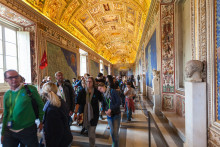
Vatican Museums (Musei Vaticani)
Address:
Viale Vaticano,
00120
Vatican City
Coordinates: 41.9064° N, 12.4544° E
Standard Operating Hours (2026):
-
*Note: Last entry is strictly at 06:00 PM. Closed most Sundays except the last Sunday of each month (09:00 AM - 12:30 PM, Last Entry).
The Vatican Museums house the immense collection of art, archaeology, and ethno-anthropology gathered by the Popes over centuries. From the Sistine Chapel to the Raphael Rooms, this is a journey through the heart of the Renaissance.
⚠️ Visitor Requirement
A strict dress code is enforced. Shoulders and knees must be covered. No shorts, miniskirts, or sleeveless tops are permitted. Photography for personal use is permitted in all areas of the Vatican Museums (except for the Sistine Chapel), provided no flash is used and no tripods, stands, drones, or selfie sticks are brought in.
Visitor’s Guide: How to Experience the Vatican Museums
1
Advance Booking
Reserve tickets online at least 60 days in advance via the official portal to secure your preferred time slot and skip the 2-3 hour general admission queue.
2
Security Screening
Arrive 30 minutes before your time slot for airport-style security. Large bags, umbrellas, and knives must be left in the free cloakroom.
3
Strategic Navigation
Follow the "Short Itinerary" if time is limited, but ensure you see the Pio-Clementino Museum and the Map Gallery before reaching the Sistine Chapel.
Essential Travel Logistics
How much is admission in 2026?
Standard adult tickets — Price: €20.00 (plus €5.00 online booking fee).
Reduced tickets are available for students and children at €10.00. Entrance is free on the last Sunday of every month.
Are there VIP benefits for frequent travelers?
ItaliaPass Primo Membership
Travelers using the ItaliaPass gain access to exclusive 2026 benefits including VIP Lounge access at Roma Termini, priority booking support, and specialized concierge services.
Price: $149.00
Is the Sistine Chapel undergoing maintenance?
Yes, note that Michelangelo's Last Judgement will undergo essential maintenance through March 2026. While the Chapel remains open, certain sections of the fresco may be obscured by protective scaffolding during this period.
Trevi Fountain
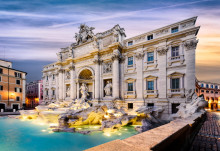
Trevi Fountain (Fontana di Trevi)
The world's most famous Baroque masterpiece, designed by Nicola Salvi and completed by Giuseppe Pannini. This iconic terminal point of the Acqua Vergine aqueduct features Oceanus on his shell-shaped chariot.
Location:
Piazza di Trevi,
00187 Roma RM, Italy
Operating Hours: Open - (Public Access)
⚠️ Visitor Requirement
It is strictly prohibited to eat on the fountain steps, enter the water, or use the fountain for "stunts." Fines for bathing in the fountain start at €450 as of 2026 regulations.
Visitor’s Guide: How to Experience the Trevi Fountain
1
Optimal Timing for Crowds
To avoid the dense 2026 tourist surges, arrive before 8:00 AM or after 11:00 PM. The morning light hits the Travertine stone beautifully for photography.
2
The Traditional Coin Toss
Hold the coin in your right hand and throw it over your left shoulder. One coin ensures a return to Rome; two coins lead to a new romance; three coins lead to marriage.
3
Explore the Vicus Caprarius
Head underground to the "City of Water" (Vicus Caprarius) to see the archaeological excavations of the Roman imperial building and the ancient aqueduct that still feeds the fountain.
Frequently Asked Questions
How much does it cost to visit the Trevi Fountain?
The fountain is located in a public square and is free to view — Price: €0.00
As of February 2026, you must purchase tickets (€2 per person) in order to get close to the fountain.
As of February 2026, you must purchase tickets (€2 per person) in order to get close to the fountain.
Are there exclusive benefits for travelers in Rome?
ItaliaPass Membership
For a more seamless Roman experience, ItaliaPass offers priority assistance, lounge access at Roma Termini, and curated tour discounts for the surrounding Trevi district.
What happens to the coins thrown into the fountain?
The coins (averaging €3,000 per day) are vacuumed periodically by the city and donated to Caritas, a Catholic charity, to support Rome’s underserved populations.